

Bi-Metal Bandsaw Blades for Industrial Cutting
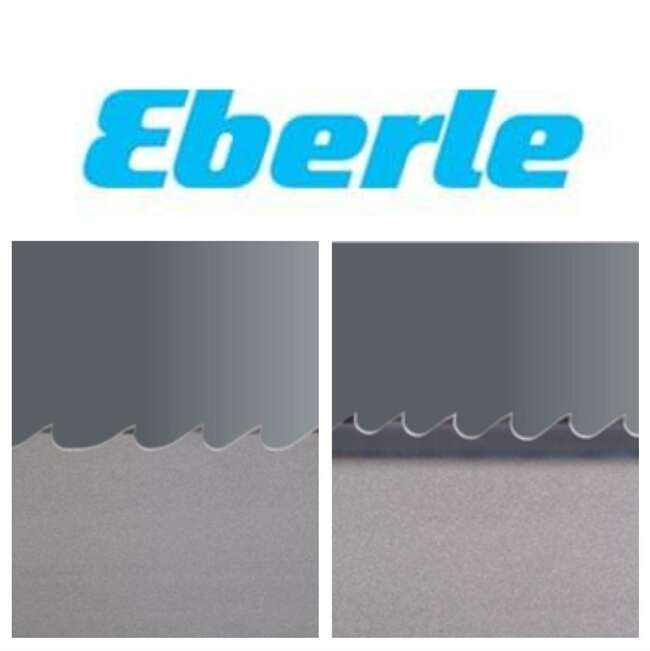
The efficiency of a metal fabrication facility is often dictated by the reliability of its primary cutting operations. When a saw blade fails or drifts, the resulting downtime and material waste ripple through the entire production schedule. Achieving a clean, square cut on hardened alloys requires a tool that balances two conflicting mechanical properties: extreme surface hardness for the cut and high-tensile flexibility for the machine's drive system. This is where bi-metal bandsaws prove useful.
The Metallurgy of High-Performance Cutting
The structural integrity of the high-performing bi-metal bandsaw blades depends on the cutting-edge electron-beam welding process. Blade manufacturers bond a strip of high-speed steel, typically enriched with cobalt, to a tough, chrome-alloy backing. This fusion creates a cutting edge capable of maintaining its Rockwell hardness even as friction generates significant heat during the cut.
The backing material is specifically heat-treated to endure constant "flexing" as it travels around the bandsaw wheels. In a standard production environment, a blade undergoes thousands of these bending cycles. Without the refined fatigue resistance found in our alloy backing, a blade would succumb to stress fractures long before the teeth had reached their wear limit. By managing this tension, Industrial Bandsaw Services provides a blade that remains stable under the high beam-strength requirements of modern hydraulic saws.
Precision Selection: Tooth Geometry and Pitch
Selecting the correct blade involves more than just matching the length to the machine. The geometry of the tooth and the spacing between them determine how the blade interacts with the material. Industrial Bandsaw Services provides variable-pitch configurations. By varying the tooth spacing, the blades reduce noise and ensure a smoother finish on structural sections and tubing.
For heavy-duty solids, chip evacuation is the primary concern. Our coarse-pitch blades feature deep gullets that carry metal swarf out of the kerf. If chips re-enter the cut, they cause "work hardening" and rapid dulling. We work with our clients to identify the optimal teeth per inch (TPI) for their material mix, ensuring every cut remains efficient.
Redefining Operational Value
Our goal is always to minimize the total cost of ownership. While a bi-metal blade represents a larger initial investment than a carbon steel alternative, the return is realized through significantly lower costs per cut.
Industrial Bandsaw Services focuses on maximizing service life to reduce the frequency of changeovers and associated labour costs. When the initial cut is precise, parts move faster through the shop floor, increasing your overall throughput and profitability.
We supply bi-metal bandsaw blades from Eberle, one of the most renowned brands. Call 905 566 4800 to get a free quote or place an order today.
FAQs
What are bi-metal bandsaw blades used for?
Bi-metal bandsaw blades are designed for cutting metals such as structural steel, tubing, and hardened alloys. They combine a high-speed steel cutting edge with a flexible alloy backing for durability and precision.
Why are bi-metal blades better than carbon steel blades?
Bi-metal blades last significantly longer, maintain hardness at high temperatures, and reduce downtime. While the upfront cost is higher, the cost per cut is lower due to extended service life and fewer changeovers.
Where can I buy reliable bi-metal bandsaw blades in Ontario?
Industrial Bandsaw Services is a trusted supplier of bi-metal bandsaw blades in Toronto, the GTA, and across Ontario. They provide expert guidance on blade selection and supply high-performance options for industrial cutting applications.


